You’ve decided to switch accounting software. Maybe QuickBooks Desktop is being sunsetted, forcing your hand. Maybe your Australian operation recently standardized on Xero while your regional branches are still stubbornly operating on MYOB or Sage. Whatever the reason, you find yourself staring at years of critical financial records resting securely inside a legacy platform you no longer wish to use, and you have zero clarity on how to extract them safely without breaking your trial balance.
This high stakes scenario is precisely where an expert accounting migration specialist steps in. Not an IT generalist trying to write makeshift scripts. Not an overwhelmed internal bookkeeper guessing at database schemas. We are talking about a dedicated specialist whose entire professional career is built around decoding how disparate accounting platforms store, process, and structure financial data and how to translate every historical transaction from one system into another with high accuracy, strict compliance integrity, and absolute peace of mind for your executive finance team.
Here is an reality: most businesses treat accounting software conversion as an administrative nuisance to be handed off to a junior staff member or mishandled through amateur CSV exports and clumsy manual imports. Both paths inevitably lead to the exact same corporate nightmare: a trial balance that fails to reconcile, corrupted historical ledgers, fragmented multi currency records, and auditors asking deeply uncomfortable questions when year end rolls around.
In this full guide, we will explore the detailed world of financial data migration, examine the exact structure of a professional conversion, and follow the professional journey of Ankit Mehta a senior specialist at MMC Convert who has spent well over a decade perfecting this craft across more than 1,200 successful migrations globally.
An accounting migration specialist is an professional who plans, executes, and validates the transfer of financial data between complex accounting software platforms. They map the chart of accounts, customer and supplier directories, open invoices, manual journals, and historical bank transactions from the source system to the destination platform, guaranteeing that trial balances match down to the exact cent before go live. This is specialized accounting engineering, not general IT data movement.
Who Is An Accounting Migration Specialist?
An accounting migration specialist is someone who bridges two distinct, highly demanding disciplines: advanced financial accounting and complex software data architecture. While general IT professionals understand databases and programmers understand code, neither typically possesses the rigorous double entry bookkeeping knowledge required to understand why an unbalanced journal entry or an unallocated prepayment will corrupt a balance sheet. Conversely, standard bookkeepers understand debits and credits, but they rarely understand database backups, API rate limits, or transactional entity mapping.
An accounting migration specialist sits at the exact intersection of these worlds. They understand the underlying database schemas of platforms like QuickBooks, Xero, MYOB, Sage, NetSuite, and Odoo, while fully grasping the accounting principles that govern tax compliance, depreciation schedules, and accrual accounting.
Ankit Mehta at MMC Convert embodies this dual expertise. Over his career, Ankit has personally led or overseen more than 1,200 successful cloud accounting migrations. That milestone is not just a statistic; it is a testament to scar tissue earned through years of encountering edge cases that documentation never warns you about. From bizarre multi currency rounding variances originating in legacy desktop databases to fragmented customer records containing decades of unallocated credits, Ankit has seen, analyzed, and successfully resolved them all.
| Migration Parameter | General IT / DIY Approach | Ankit Mehta & MMC Convert |
|---|---|---|
| Chart of Accounts Mapping | Manual guesswork & errors | Structured, field by field architectural mapping |
| Trial Balance Reconciliation | Rarely verified post import | Rigorous reconciliation before handover |
| Multi Currency Handling | Historical exchange rates lost | Historical rates and gain/loss preserved |
| Tax Compliance Alignment | Ignored or misconfigured | Built directly into regional tax frameworks |
| Data Integrity Validation | Surface spot checks only | Full comparative financial reporting |
| Platform Ecosystem Mastery | Generic export tools | Deep native expertise across 20+ platforms |
Ankit Mehta’s Journey: From Accounting Foundations to Global Migration Expert
Ankit Mehta spent over a decade building deep expertise in how different accounting platforms store, structure, and process financial data. Starting with small business conversions, he developed the frameworks and validation processes that now power MMC Convert's global migration service across more than 1,200 completed projects.
Every true specialist has an origin story built in complexity. For Ankit Mehta, his journey into the specialized niche of financial data migration began over a decade ago when small and mid sized businesses (SMEs) around the world began their massive migration wave from legacy desktop software to agile cloud platforms.
In the early days of cloud accounting adoption, business owners quickly realized that migrating their financials wasn’t as simple as clicking an “export to Excel” button. When companies attempted to transition their accounting records independently, their balance sheets broke. Historical invoices lost their payment allocations. Inventory valuations became scrambled. Tax codes mapped to entirely wrong ledger categories.
Recognizing an urgent market need for absolute financial accuracy during technological change, Ankit immersed himself in the mechanics of accounting software conversion. He studied the proprietary database structures of legacy heavyweights like QuickBooks Desktop and MYOB, alongside the emerging API architectures of cloud innovators like Xero and QuickBooks Online.
Through relentless testing, iterative framework development, and a steadfast refusal to compromise on trial balance accuracy, Ankit helped establish MMC Convert as a global authority in accounting data migration services. Today, his journey represents the gold standard of what businesses look for when they entrust their most sensitive financial history to an external expert. Whether advising a rapidly scaling tech startup in Silicon Valley or a multi entity manufacturing enterprise in London, Ankit brings the same rigorous, methodical approach to every project.
The Anatomy of a Complex Financial Data Migration
A professional accounting migration follows four core phases: initial scoping, chart of accounts mapping, data extraction and transformation, and trial balance validation. Each phase requires both accounting knowledge and technical precision. Skipping or rushing any step is where most DIY migrations break down.
To understand why an expert like Ankit Mehta is indispensable, you must understand what actually happens beneath the hood during a professional cloud accounting migration. It is not merely copying files from Folder A to Folder B; it is an detailed translation exercise across different relational database models.
1. Initial Assessment and Scoping
Before a single line of code or data packet is touched, a thorough discovery phase must occur. How many active years of financial history exist in the source system? How many monthly transactions are processed? Are there multiple tracking categories, custom classes, multi currency accounts, or integrated payroll systems? Ankit and his team evaluate these parameters carefully to design a customized migration roadmap that prevents surprises and guarantees zero operational downtime for the business.
2. Chart of Accounts Transformation
The Chart of Accounts (COA) is the structural skeleton of any accounting system. When moving from one platform to another, account naming conventions, account codes, and account types rarely match one to one. A DIY migration often results in asset accounts being merged with liability accounts or depreciation being lumped into general expenses. Ankit builds full mapping matrices that ensure every legacy nominal code finds its exact structural equivalent in the new destination platform.
3. Data Extraction and Transformation Engine
Raw data exported from an accounting database is inherently unreadable to a new destination platform. Each software ecosystem structures transactions, bills, credit notes, and journal entries according to its own proprietary logic. The transformation phase requires advanced data processing to reshape the extracted records so they conform to the destination software’s API requirements without dropping decimal places, truncating transaction narratives, or scrambling invoice aging dates.
4. Trial Balance Validation and Reconciliation
This is where amateur migrations fail and professional migrations succeed. Once data is imported into the destination system, Ankit runs rigorous comparative validations. The trial balance in the old system must match the trial balance in the new system down to the exact penny. Aged receivables, aged payables, bank reconciliation balances, and tax liability accounts are cross examined systematically. If even a one cent variance is detected, the automated and manual diagnostic tools isolate the root cause immediately, allowing the team to correct it before the client ever logs into the new interface.
Ready to transition your accounting platform smoothly?
MMC Convert handles end to end data migrations from any legacy system to your cloud platform of choice, backed by a 100% verified trial balance guarantee.
Get a Free Quote Today →Platform Specific Complexities: Navigating the Software Ecosystem
Every major accounting platform has its own distinct personality, quirks, and technical barriers. An experienced migration specialist must master these nuances to ensure a frictionless transition.
QuickBooks to Xero Transitions
With the ongoing QuickBooks Desktop discontinuation affecting thousands of businesses globally, transitioning from desktop database files (.QBW) to cloud environments like Xero has become one of the most in demand services. QuickBooks Desktop allows flexible journal entries and inventory setups that do not translate intuitively into Xero’s streamlined cloud architecture. Following established protocols for converting from QuickBooks to Xero ensures that historical customer balances, open invoices, and detailed journal histories remain fully intact and actionable.
MYOB, Sage, and Enterprise Platforms
Moving from regional giants like MYOB in Australia and New Zealand, or Sage in the UK, presents unique regional compliance challenges. For instance, tax handling for VAT in the UK or GST in Australia must be mapped carefully so that historical tax returns and ongoing BAS statements remain audit ready. Ankit Mehta’s deep familiarity with over 20 distinct accounting platforms ensures that whether a business is migrating from Zoho Books, NetSuite, FreshBooks, or Wave, the specific architectural hurdles of that platform are anticipated and neutralized well in advance.
Why Trust and Trial Balance Reconciliation are Non Negotiable
At MMC Convert, no migration is signed off until the trial balance in the new system matches the source system to the exact cent. Every account, every outstanding invoice, and every bank balance is cross checked before handover. This single commitment is what separates a trustworthy migration from a risky one.
Your financial records represent the legal, fiscal, and operational heartbeat of your enterprise. They are scrutinized by tax authorities, lending institutions, potential investors, and internal auditors. Introducing structural errors during an accounting software conversion is not just a minor inconvenience it creates severe compliance liabilities, distorts profitability metrics, and introduces profound risks into executive decision making.
This is why Ankit Mehta operates under a strict, non negotiable rule at MMC Convert: no migration file is ever handed over to a client until the source and destination trial balances match with absolute mathematical precision.
Before a client takes their first breath of relief in their new software environment, a multi tier audit protocol is executed. This commitment to transparency and verifiable accuracy is precisely why thousands of businesses across the United States, United Kingdom, Canada, Australia, and beyond continue to trust MMC Convert with their historical financial data. For those who want to understand what this validation looks like in practice, reading about the importance of a test migration for a smooth accounting software transition provides essential context.
Comprehensive Data Transfer Matrix
When clients engage an accounting migration specialist, understanding what data actually makes the journey is crucial for expectation setting. Here is a detailed breakdown of what a professional cloud accounting migration transfers from source to destination:
| Financial Data Category | Transferred Successfully? | Execution Notes & Nuances |
|---|---|---|
| Chart of Accounts | Yes | Mapped directly or restructured according to custom client specifications. |
| Customer & Supplier Contacts | Yes | Full contact details, payment terms, and historical outstanding balances included. |
| Sales Invoices & Bills | Yes | Line item details preserved wherever destination platform capabilities permit. |
| Credit Notes & Customer Payments | Yes | Allocated accurately to corresponding invoices or maintained as unallocated credits. |
| Manual Journal Entries | Yes | Complete with narrative descriptions, reference numbers, and account allocations. |
| Bank Transactions | Yes | Reconciled up to the agreed cutoff date balance. |
| Multi Currency Records | Yes | Historical exchange rates and foreign currency gain/loss data preserved. |
| Fixed Asset Registers | Case by Case | Evaluated based on destination platform support and asset volume complexity. |
| Payroll History | Case by Case | Handled via dedicated sub processes depending on regional payroll module availability. |
Conclusion: Partnering with the Right Specialist
Transitioning your financial data to a modern cloud accounting platform is a milestone moment for your business. It unlocks operational efficiencies, streamlines collaboration, and provides real time financial visibility. However, attempting this journey without expert guidance exposes your enterprise to unnecessary risks, data corruption, and regulatory headaches.
Ankit Mehta has built his reputation at MMC Convert on a singular, unwavering premise: the migration isn’t finished until the numbers are flawless. With over 1,200 successful conversions spanning four continents and dozens of software ecosystems, Ankit and his specialist team provide the technical mastery and accounting rigor that modern businesses demand.
If you are ready to transition your financial records safely, efficiently, and with zero operational downtime, contact the MMC Convert team today to discuss your specific migration requirements with Ankit’s expert specialists.
Ready to migrate your accounting data with complete confidence?
MMC Convert specializes in flawless accounting software conversions from any platform to any other. Enjoy fixed transparent pricing, verified trial balance reconciliation, and zero downtime. Talk to Ankit's team today and get your free customized quote.
- ✓ 100% Data Accuracy & Trial Balance Verification Guaranteed
- ✓ Full Historical Financial Records Safely Transferred
- ✓ Multi Currency, Tracking Categories, & Payroll Support
- ✓ Compliance Safe Migration Timelines for Global Businesses
Frequently Asked Questions
What exactly does an accounting migration specialist do?
An accounting migration specialist plans, structures, and executes the complete transfer of financial data between accounting platforms. This includes mapping the chart of accounts, transferring customer and vendor directories, migrating historical invoices, bills, and journals, and validating that the trial balance in the destination system reconciles perfectly with the source system before go live.
How long does a professional accounting software migration take?
Most standard migrations managed by MMC Convert are completed within 3 to 7 business days. Larger, more complex files featuring multiple years of detailed transaction history, multi currency setups, or detailed custom charts of accounts may require 10 to 15 business days. A clear timeline is provided following the initial file assessment.
Will my business lose any historical data during the migration?
No. The primary objective of an expert led financial data migration is to preserve your complete operational history in the new platform. MMC Convert performs rigorous comparative reconciliations between source and destination files prior to handover, ensuring zero data loss or misallocation.
Can I migrate from any accounting software to any other?
Yes. MMC Convert handles migrations across all major platforms, including QuickBooks Desktop and Online, Xero, MYOB, Sage, Reckon, Odoo, Zoho Books, NetSuite, Wave, FreshBooks, and Wafeq. While the underlying technical approaches vary by platform, the end result is always a fully verified, pristine destination file.
Do my team and I need to stop working during the migration?
Not at all. Your team can continue daily operations in your existing legacy system while the migration is executed securely in the background. Once your new destination file is fully reconciled and verified, you perform a clean switchover. Any transactions entered between the data cutoff date and go live are easily captured via a quick, streamlined catch up process.
What is the difference between an accounting migration specialist and a standard bookkeeper?
A bookkeeper is responsible for recording and managing day to day financial transactions within an active system. An accounting migration specialist is a technical and financial engineer who handles the complex data architecture required to move historical records safely between different software systems without breaking the underlying accounting rules.
How much does an accounting software migration cost?
MMC Convert provides transparent, fixed price quotes customized to your source platform, destination platform, total transaction volume, and number of historical years required. Pricing is agreed upon upfront before any work begins, representing a fraction of the cost associated with botched DIY migrations or subsequent audit corrections.
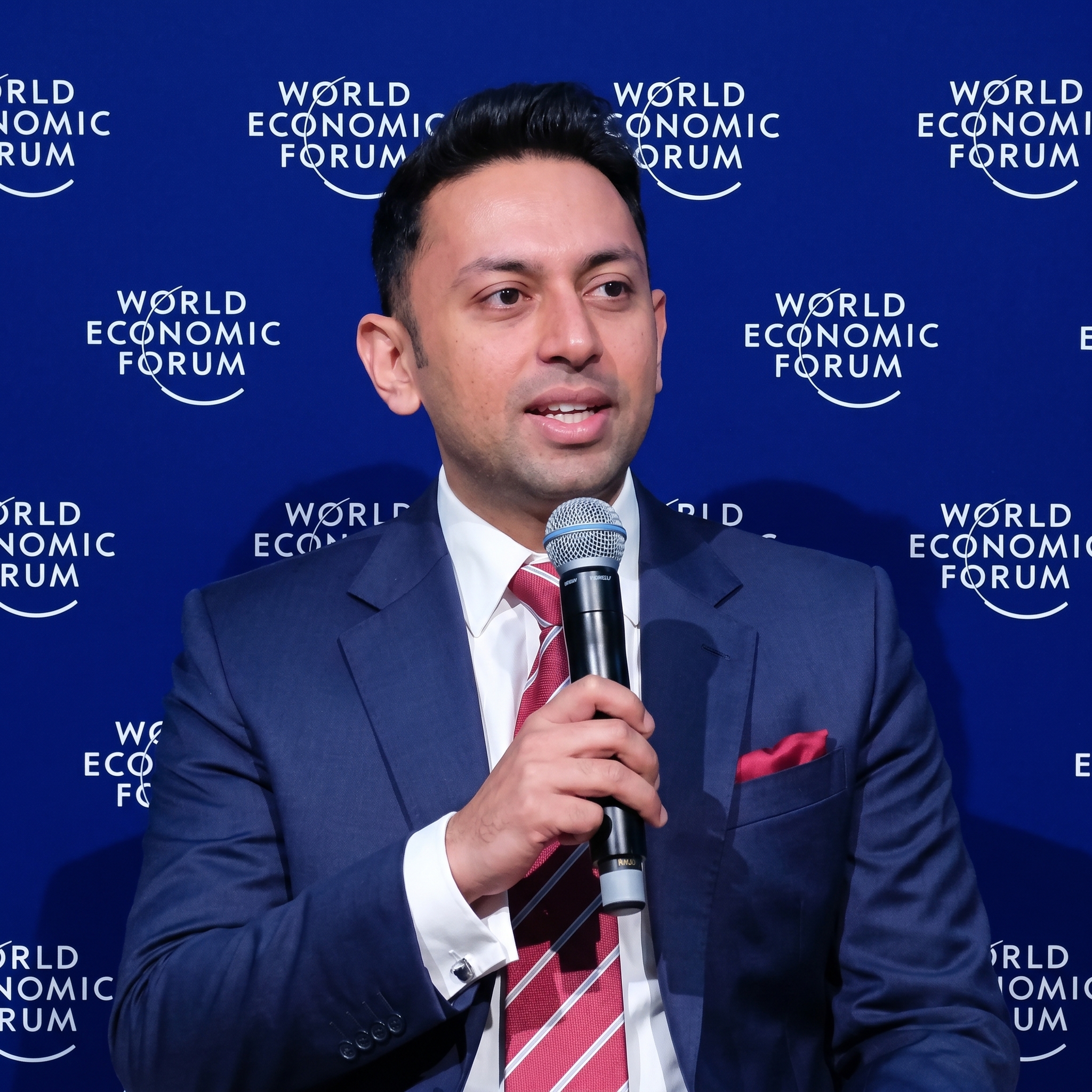
Ankit has led over 1,200 successful accounting data migrations, specialising in QuickBooks Desktop transitions to cloud platforms. He advises businesses across the US, UK, Canada, Australia, and globally on data integrity, platform selection, and compliance-safe migration timelines.